Showing posts with label Certified Loose Diamonds. Show all posts

Thursday, January 23, 2020

The Essential Steps to Buy a Stunning Diamond at a Great Price


Do loose diamonds for sale in North Carolina have resale value? That is the most asked question to a diamond retailer. Well, you would be happy to know that diamonds do have resale value. Be it an engagement ring, family heirloom diamond or just a loose diamond, they all have resale value. It depends on multiple factors including, how and when you bought the diamond. And because there is always a demand for diamonds, there is adequate market for selling diamonds.

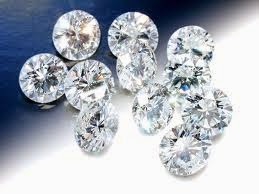
Certified loose diamonds

What Determines Worth Of Your Loose Diamond?

Commonly, there are three main types of diamond values as mentioned below.

1 – Value at Purchase
As soon as you walk inside a diamond store, its high prices are evident. It’s a common practice that jewelers place mark-up on diamond jewelry which is an extra cost added to the original price when you buy loose diamonds online. Jewelers add mark-ups to cover slow-moving inventory, overhead costs and profit. It is obvious that when you buy a diamond, it’s actually going to be of less worth than what you paid for it.

2 - Value of Appraisal
When you purchase certified loose diamonds, jewelers may provide you with an appraisal value. Appraisal value is often a document that contains characteristics and value of your diamond at give point. Appraisal value is higher than your purchase value. So, you can replace the diamond without having to pay extra cost. But, you might also need to pay a high insurance premium for that piece.

3 – Value at Resale
Resale value is simply the amount you will receive if you decide to sell your jewelry. Factors that may pull down the resale value of your diamond are – (a) retail mark-up at purchase, and (b) decline in diamond prices. In favorable conditions, you can resell your diamond up to 50% or more of its purchase price. But, when you have truly exceptional certified conflict free diamonds, you can surely make money out of it. Also, increase in the diamond prices can give you a high resale value in Greensboro NC, High Point, Jamestown, Winston Salem, Lexington, Burlington, Kernersville, Thomasville, Summerfield, Oak Ridge, Reidsville, and Asheboro, North Carolina.

Certified loose diamonds

To Conclude

To get a high resale value for your GIA, AGS, IGI and EGL certified loose diamonds, it would help if you:

(a) Buy the jewelry from an authentic store where mark-up prices are minimal.

(b) Sell your diamond when its market prices are high.

You can certainly get a high resale value when you are not paying extra dollars for unnecessary mark-up prices.

Monday, October 20, 2014

Learn The Basics of Loose Diamonds

Are you familiar with the four C's of loose diamonds? Since you are probably not a professional jeweler, then I would venture to guess the answer is no! This is perfectly okay and normal. The only people who are supposed to know about such details are jewelers and the people who write about diamonds for a living.
loose diamonds
The first C of diamonds is color. This determines the shade of white of your diamond. Most diamonds are white, but to varying degrees. The second C of loose diamonds is clarity.

This determines how perfect or imperfect your diamond may be. Since these stones are made in the earth naturally, it is safe to assume you will not find very many flawless ones. The third C of diamonds is the cut. This not only refers to the overall shape of the stone, but also to the lines cut within the stone that give it its luster. These lines are called facets. A brilliant cut diamond is said to have maximum luster. The last C of diamonds is carat. This is how your diamonds are weighed and measured. The larger the carat, the physically larger the stone will be.

Now that you are savvy, go browse some gorgeous Van Scoy certified Loose diamonds!

Sunday, January 26, 2014

Loose Diamonds: Discussing the Basic Knowledge and Standards

Are you familiar with the four C's of loose diamonds? If you aren’t, then you certainly should take a minute to research this very common information. All certified loose diamonds that are found in your local jewelry store will have likely been graded by these standards. They were set forth by the age Gemological Institute of America and are widely accepted all over the world.

The first C of loose diamonds is the cut. This refers to the overall shape of the stone, as well as the many facets cut into the stone to give it its luster and sparkle. The second C is clarity. Most diamonds have imperfections, and these nicks and scratches are called blemishes (surface damage) or inclusions (internal damage). The third C is color. Everyone is familiar with your typical white diamond. However, many people do not realize most of these diamonds actually have tints of yellow in them. Diamonds can also come in a variety of other colors, but they are not subjected to the same standards as white diamonds. The very last C of loose diamonds is the carat weight. This is the unit of measurement used to weigh your diamond and determine its sheer size. The larger the carat, the bigger the stone will be.